Tools
Is My Leak an Emergency?
Four yes or no questions decide whether a leak needs an engineer now. Water near electrics, water still escaping with the stop tap closed, water spreading…
London inside the M25, 24/7
Emergency leak attendance
Emergency Leak Experts London attends water leaks across London, finds the source, stops it, fixes small jobs on the spot and quotes in writing for larger repairs. No VAT is charged.
from £220 an hourEmergency leak detection, including nights, weekends and bank holidays. A fixed hourly rate quoted before we attend and never exceeded.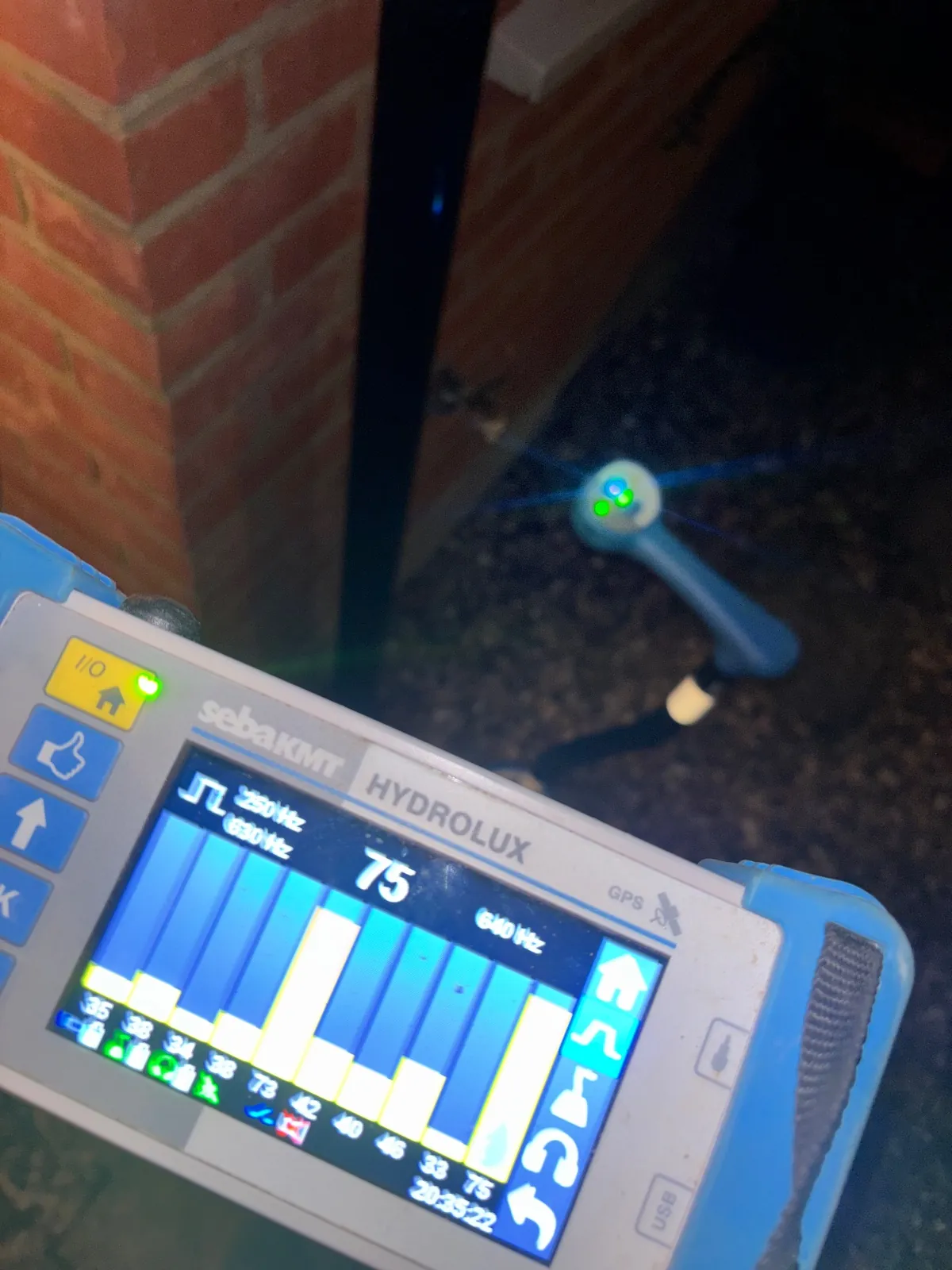
Emergency leak attendance
Three details are enough to start.
London inside the M25, 24/7.
Close the stop tap. It cuts the supply to the whole property.
The first hour in orderWhen the consumer unit can be reached without wading through water, cut the electricity there. Stay away from wet sockets and light fittings.
Keep the room safeCatch what is left with a bowl, towels or a bucket, and move belongings out of the way.
Can it wait until morning?Photograph the damage and note the times before you clean up.
What to recordFour yes or no questions give a verdict: call now, or can wait until morning. The checker is guidance only; an engineer on site confirms it.
Call now
Can wait until morning
The water is contained and has stopped with the stop tap closed. Leave the stop tap closed, keep the containers emptied and photograph the damage.
Read next
Can you smell gas? Leave doors and windows open, stay away from switches and naked flames, take everybody outdoors and ring the National Gas Emergency Service on 0800 111 999. Make that call before any other.
Is water running close to electrics, or is a pipe flooding the property? Turn off the water at the stop tap. When the consumer unit can be reached without wading through water, cut the electricity there. Stay away from wet sockets and light fittings.
Pick the closest match. Each one opens the guide that says whether it is a call now or can wait, and what to do first.
Different places leak in different ways, and each needs a different first move. Pick the one that matches what you are looking at.
Four steps from the first message to a stopped leak.

Send the postcode of the property and where the water is showing, through the enquiry form. If it is near electrics or cannot be stopped, say so first.
A fixed hourly rate quoted before we attend and never exceeded. No call-out fee and no travel charge: the rate starts when work starts. No VAT is charged.
The team traces the source with whichever instruments the leak needs and stops the water. A small fix, such as tightening a fitting or changing a small part, is done on the spot once the leak is found.
For a longer repair the leak is stopped first, and the repair is quoted in writing after that. Repair work runs at the same hourly rate as detection, with parts and materials costed on top and agreed before we start. Making good, such as walls, ceilings and decorating, is quoted per job by a partner team.
Leaks are found with instruments, and every instrument has a limit. The team picks the method the leak needs.
Note 1
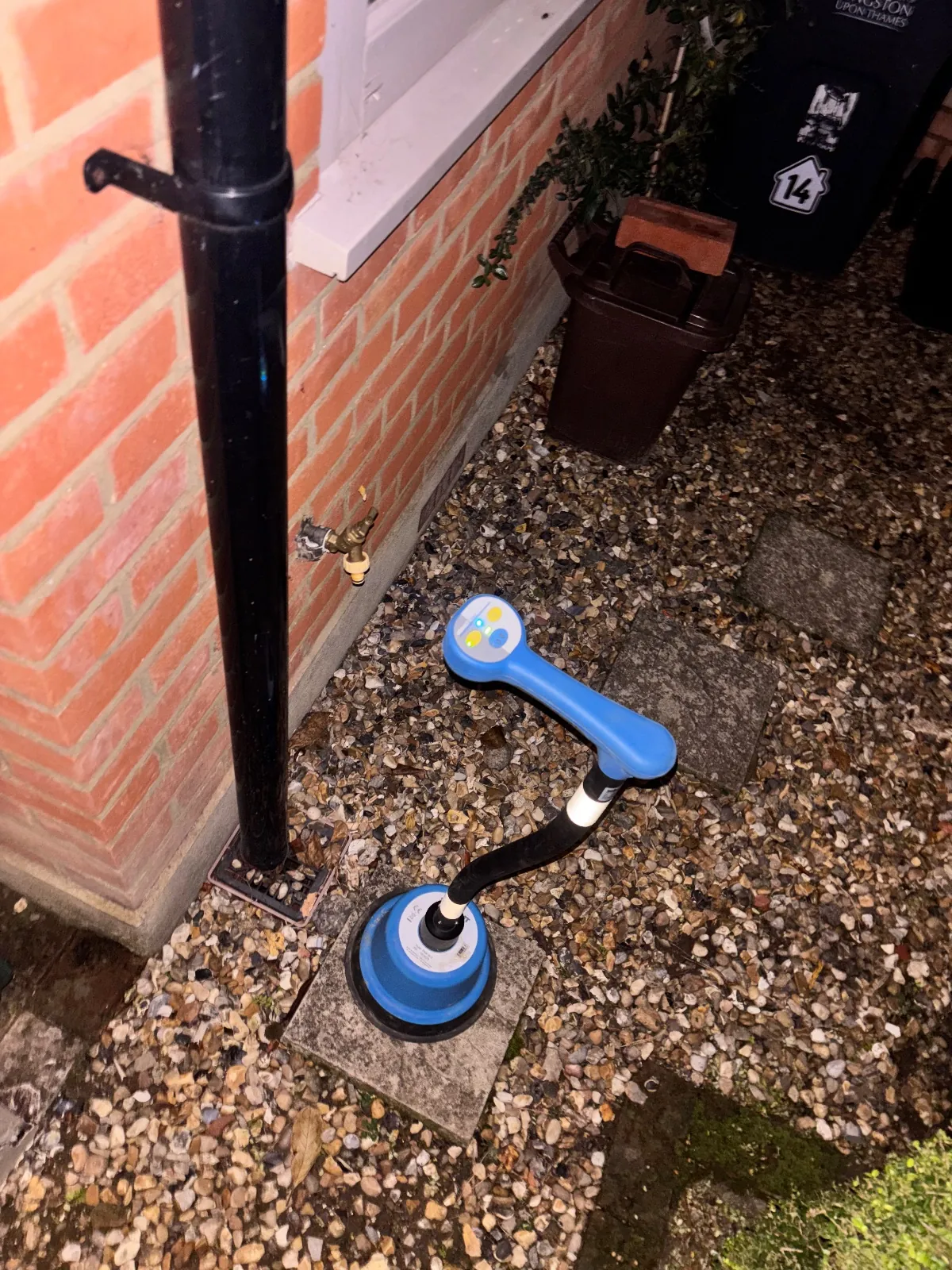
A ground microphone and handheld unit listen for the sound of water escaping and show it band by band.
Where it stops. Traffic, plant and plastic pipe can mask or carry the sound, so it points to an area and a second method confirms the spot.
Note 2
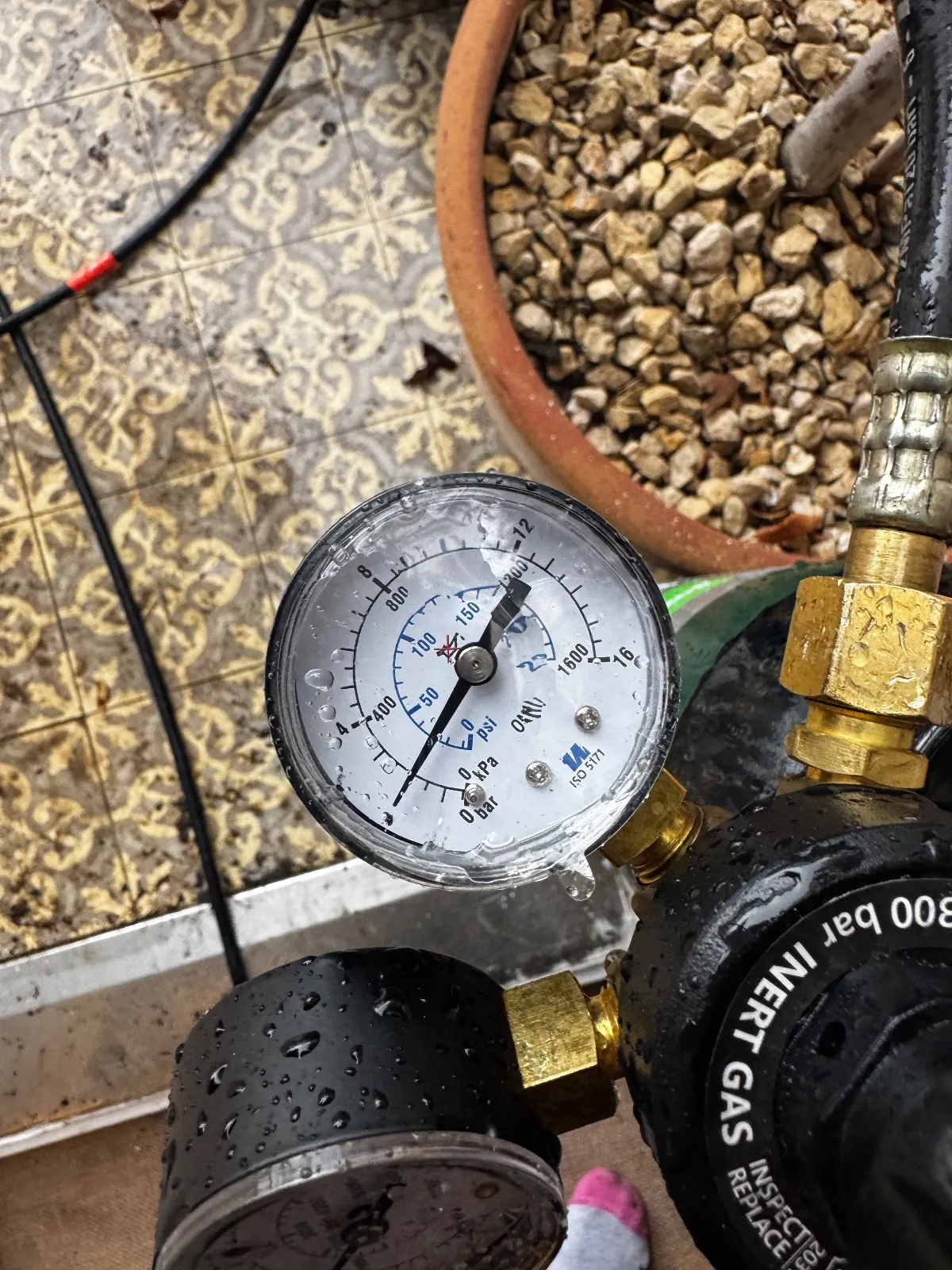
Pipework is filled and pressure tested with gas, and the gauge and detector show where it escapes.
Where it stops. The pipe has to be isolated and held under test, and a joint that only weeps when hot or under working pressure can need another method.
Note 3
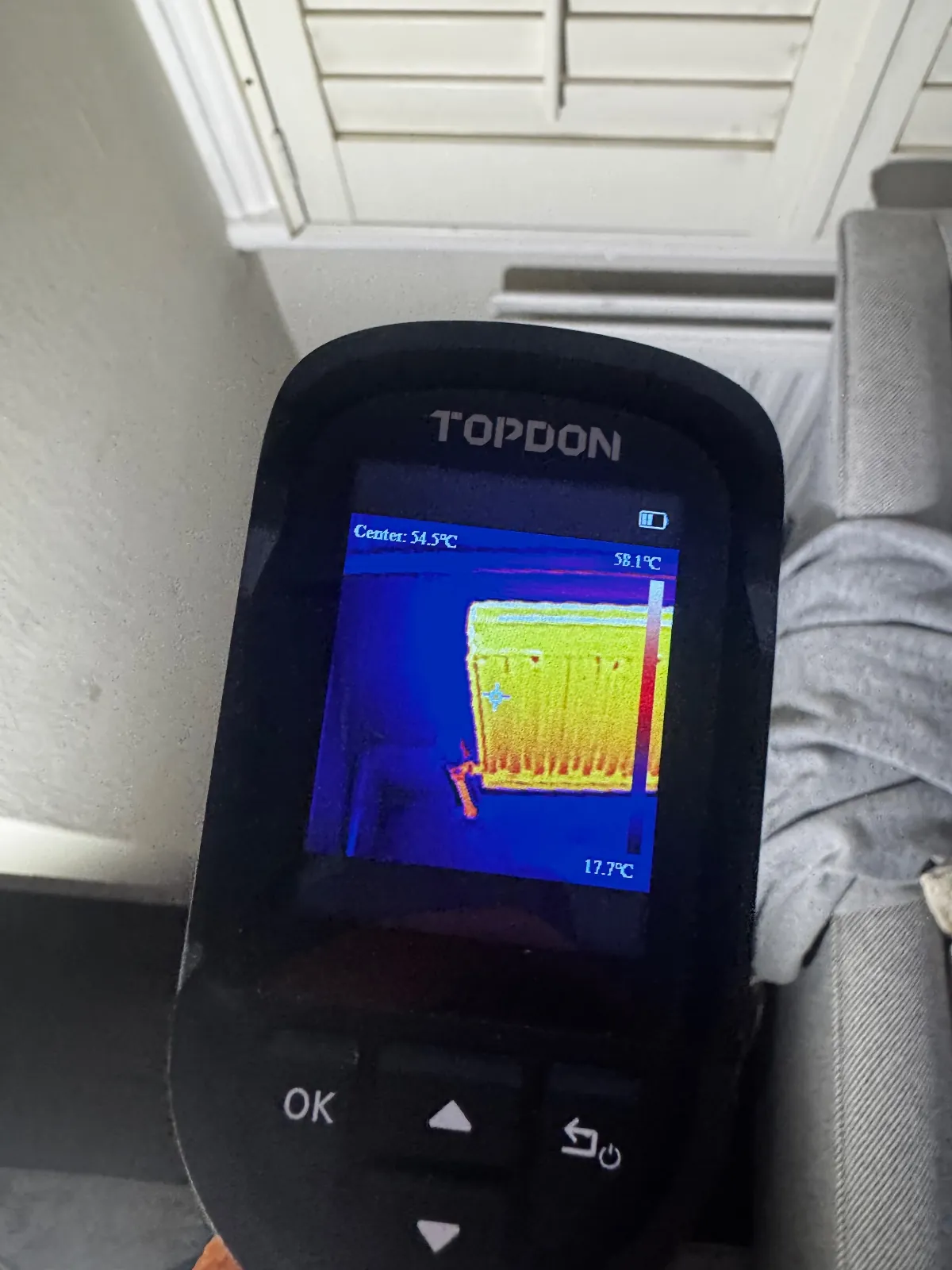
A thermal camera shows warm and cool patches along a pipe run, a radiator or a wall.
Where it stops. It sees surface temperature, not water, so it points to a place for the moisture meter or the acoustic unit to check.
Note 4
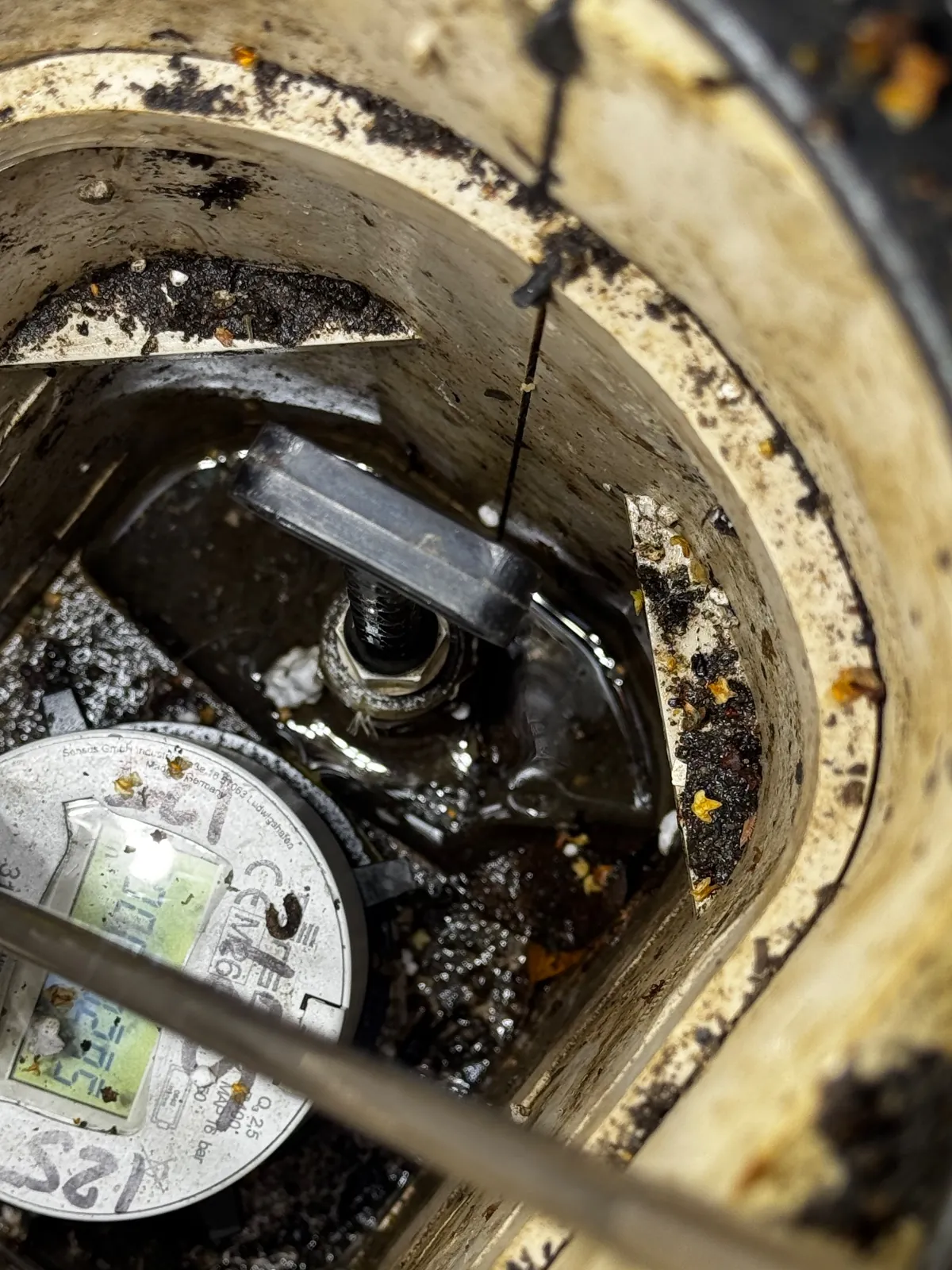
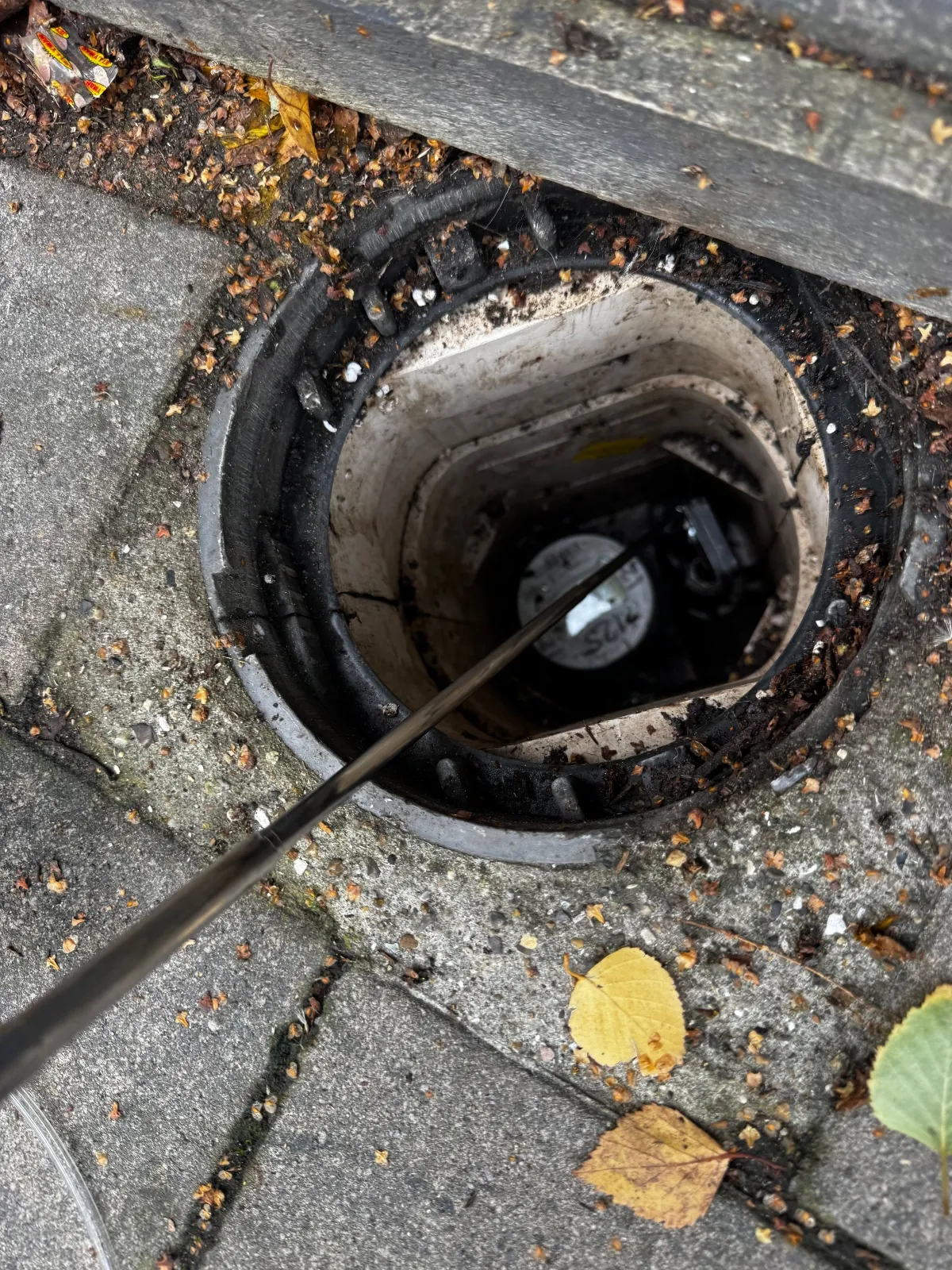
A probe in the meter chamber reads the incoming supply at the boundary before anything is dug.
Where it stops. It reads only at the chamber, so it narrows the length of pipe, not the exact spot.
Note 5
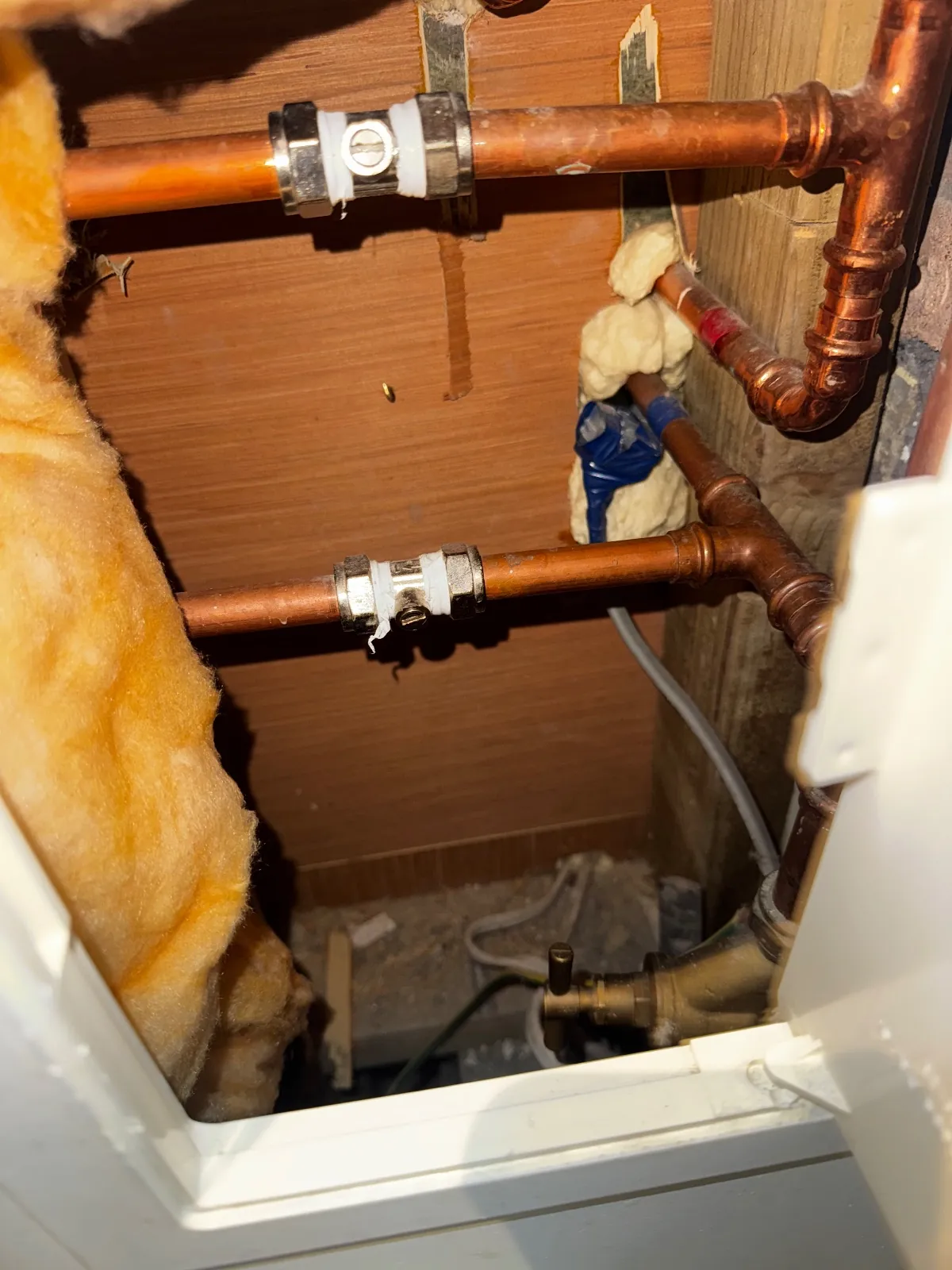
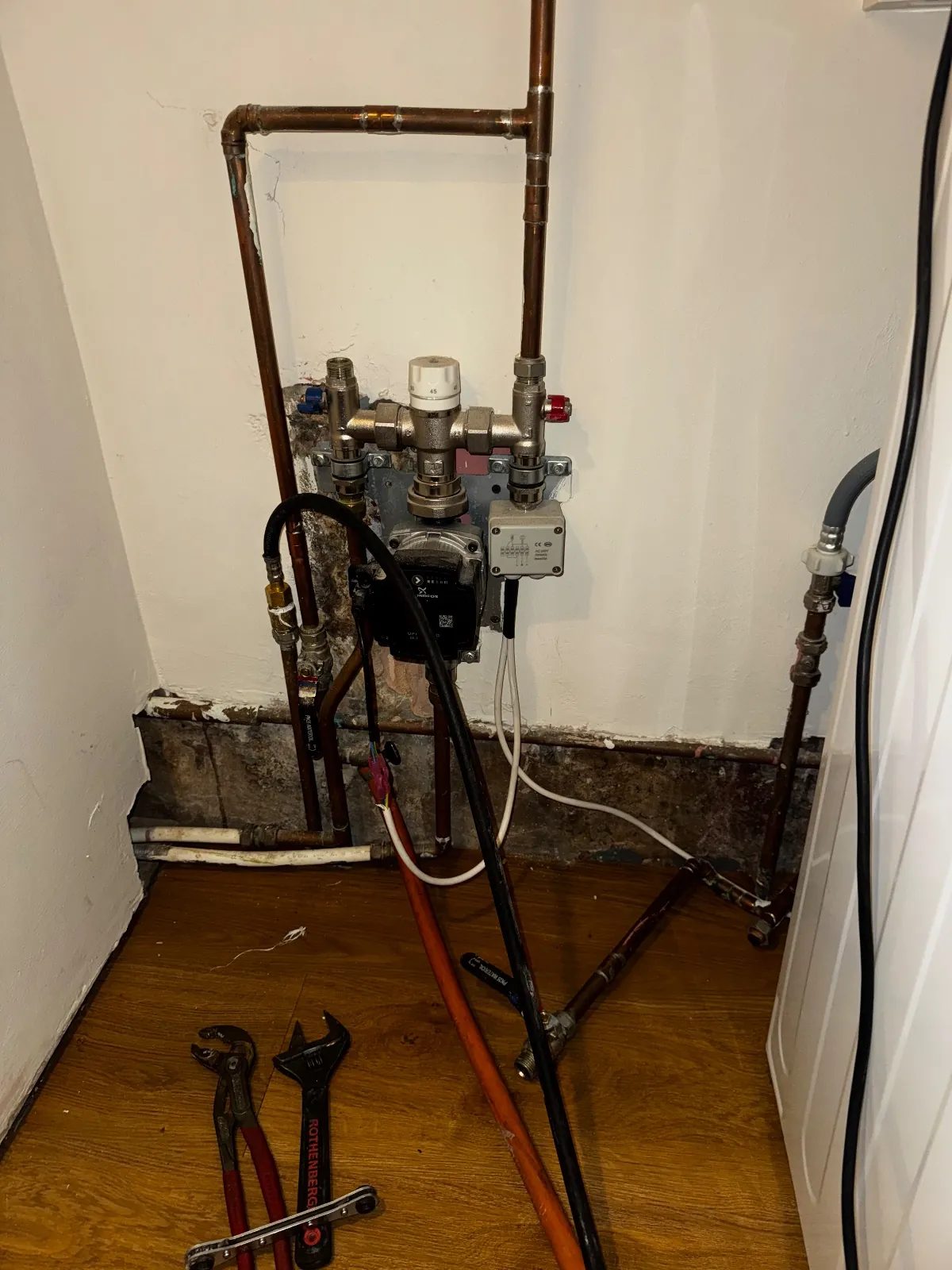
A small opening reaches concealed pipework and valves so a joint can be inspected without stripping the room.
Where it stops. It is cut only once other methods have pointed to the place, and making good is quoted separately.
A wet ceiling is rarely where the pipe is failing. The first job is to prove where the water is coming from, so the only opening made is the one that reaches it.
01
The meter, the stop tap, the pressure and the pattern of the damp narrow the search before any instrument comes out of the van.
02
Acoustic, thermal imaging, moisture mapping and tracer gas are each used where they can see, and read against one another, so one reading is never taken on faith.
03
Where the structure has to be opened, it is opened at the confirmed point. What it will cost to make good is agreed before anything is cut.
Each of these is the right call in one situation and the wrong call in another. Emergency Leak Experts London is one option, for a hidden or unstoppable leak.
Can
Repairs pipes, joints, taps, valves and cylinders when you already know where the water is coming from.
Cannot
Often not equipped to find a hidden source, and may open a wall or floor to look.
Can
Finds a hidden source with listening equipment, thermal imaging, moisture mapping or tracer gas.
Cannot
Some only locate. The repair, the drying out and the decorating may be someone else.
Can
Looks after the mains in the street and the pipe up to the property boundary.
Cannot
Does not repair pipework inside the boundary or inside the building.
Can
A landlord or managing agent arranges repairs to the structure and shared pipework. An insurer takes the claim.
Cannot
Neither stops the leak. A landlord may not answer at night, and an insurer may not cover what its terms exclude.
Leak work is charged by the hour. These are worked examples of rate multiplied by typical hours, not quotes. The rate is stated before we attend.
Published prices
Other rates, by the hour
Tracer gas work is charged £80 per gas cylinder on top of the hourly rate.
No VAT is charged
A fixed hourly rate quoted before we attend and never exceeded
No call-out fee and no travel charge: the rate starts when work starts
No find, no fee waives the detection fee only when a live leak inside your own property cannot be located. No find, no fee in full
| Job | Rate | Typical hours | Typical total |
|---|---|---|---|
| Standard detection, one to two rooms | £160 an hour | 2 hours | £320 |
| Standard detection, whole house | £160 an hour | 3 to 4 hours | £480 to £640 |
| Detection with tracer gas, cylinder included | £160 an hour, plus £80 for the cylinder | 2 to 4 hours | £400 to £720 |
| Mains or supply pipe | £180 an hour | 2 to 3 hours | £360 to £540 |
No VAT is charged. No find, no fee waives the detection fee only when a live leak inside your own property cannot be located.
What happens on the visit, and what is agreed in writing first.
On the visit
The team traces the source with whichever instruments the leak needs and stops the water. A small fix, such as tightening a fitting or changing a small part, is done on the spot once the leak is found.
In writing
For a longer repair the leak is stopped first, and the repair is quoted in writing after that. Repair work runs at the same hourly rate as detection, with parts and materials costed on top and agreed before we start.
Afterwards
Making good, such as walls, ceilings and decorating, is quoted per job by a partner team.
No find, no fee waives the detection fee in one situation: we attend a confirmed live leak inside your own property and a live leak cannot be located. A leak that proves to be a neighbour's, a communal riser's or the water company's main is a located leak and is charged. A survey that establishes no leak exists is charged for the hours as well, because ruling a leak out is the answer you paid for.
The same instruments, applied to very different buildings. How a leak shows itself depends on what the building is made of.
A leak often starts in someone else’s home, and the first questions are whose water it is and how to isolate it without a stop tap of your own.
When the water comes from above
Pipework chased into solid walls and buried in floors, altered over decades. The route the pipe takes matters as much as the fault itself.
A leaking pipe in a wall
Plastic and push-fit pipework in boxed risers and ceiling voids, where a small leak can travel a long way before it shows.
A leak under the floor
Tenanted or empty, the job is the same: stop it, find it, and write it up for whoever has to account for it.
A leak while nobody is in
Whose leak it is decides who deals with it.
More in who to callThe common situations, and call now or can wait.
The first hour, what to record and what happens when the engineer arrives.
More in right nowCheck whether it is an emergency, photograph the damage properly, or see what a visit typically adds up to. None of them asks for your details.
Four yes or no questions decide whether a leak needs an engineer now. Water near electrics, water still escaping with the stop tap closed, water spreading…
What is done, how it is charged, and what a quote looks like.
Reporting a leak, what a report should show, and what the policy may respond to.
What counts as an emergency, who to call, and what to do while you wait.
Coverage
London inside the M25, 24/7.
We attend all of London. Send the postcode of the property and where the water is showing.
Emergency leak detection is from £220 an hour, and the exact rate is stated when you book. A fixed hourly rate quoted before we attend and never exceeded, and no call-out fee and no travel charge: the rate starts when work starts. No VAT is charged. The pricing page lists every rate.
A fixed hourly rate quoted before we attend and never exceeded. It does not rise because a leak was awkward, large or ran late, and equipment is never billed as an extra. Tracer gas work adds £80 for the gas cylinder, only when gas is used.
No find, no fee waives the detection fee in one situation: we attend a confirmed live leak inside your own property and a live leak cannot be located. A leak that proves to be a neighbour's, a communal riser's or the water company's main is a located leak and is charged. A survey that establishes no leak exists is charged for the hours as well, because ruling a leak out is the answer you paid for.
A small fix, such as tightening a fitting or changing a small part, is done on the spot once the leak is found. For a longer repair the leak is stopped first, and the repair is quoted in writing after that. Repair work runs at the same hourly rate as detection, with parts and materials costed on top and agreed before we start. Making good, such as walls, ceilings and decorating, is quoted per job by a partner team.
We attend London inside the M25, 24/7. There are no separate borough pages: the areas page explains how coverage works.
No VAT is charged on any price shown on this website.
London inside the M25, 24/7.